86. Factual Truth, Mythic Truth
(Epistemic status: well-attested and frequently mentioned and talked around, but often not actually talked about explicitly. For IL.)
"Truth is stranger than fiction." "Stories are sometimes truer than hard facts." "Elith-mirta, true-truth, must never be confused with ainai-mirta, beauty-truth; such would be a severe heresy." "Long, long ago, when crows were white..." "As a writer, your job is harder than God's. God simply made things be true. You have to make them make sense."
There's something lurking here. Can you see it? There's a slippage of language around truth here. Sometimes it hides behind the verb "to be". It seems to have to do with two senses of "truth". One sense lives in the world of atoms; of cause and effect; of axioms, theorems, and proofs; of studies of psychology and economics; of precisely how everything that objectively exists is, precisely how it is, devoid of any subjectivity or interpretation. The other sense lives in the world of stories and myths; of desires and symbols and representations; of personality and dreams and hopes; of how we might wish things were rather than how they are. Let's uncreatively call these "factual truth", or just fact, and "mythic truth", or just myth. (Unmarked "truth", we will take as... whatever the opposite of a term of art is, and taboo it.)
What is the Sun? Fact would tell you that it's a massive ball of mostly hydrogen maybe 93 million miles away, extremely hot and constantly exploding, fusing that hydrogen steadily into helium, occasionally belching some of that scalding plasma into deep space. Mythic truth might remind you that it's the source of all life, warm and comforting, the radiant disk that brings the day and night; it might even tell you that it's a divinity, a God unto itself; that it travels through the dark of the underworld each day, to die and be reborn each night; or that it is the sole remaining sun after its six brothers were killed by a supernatural archer.
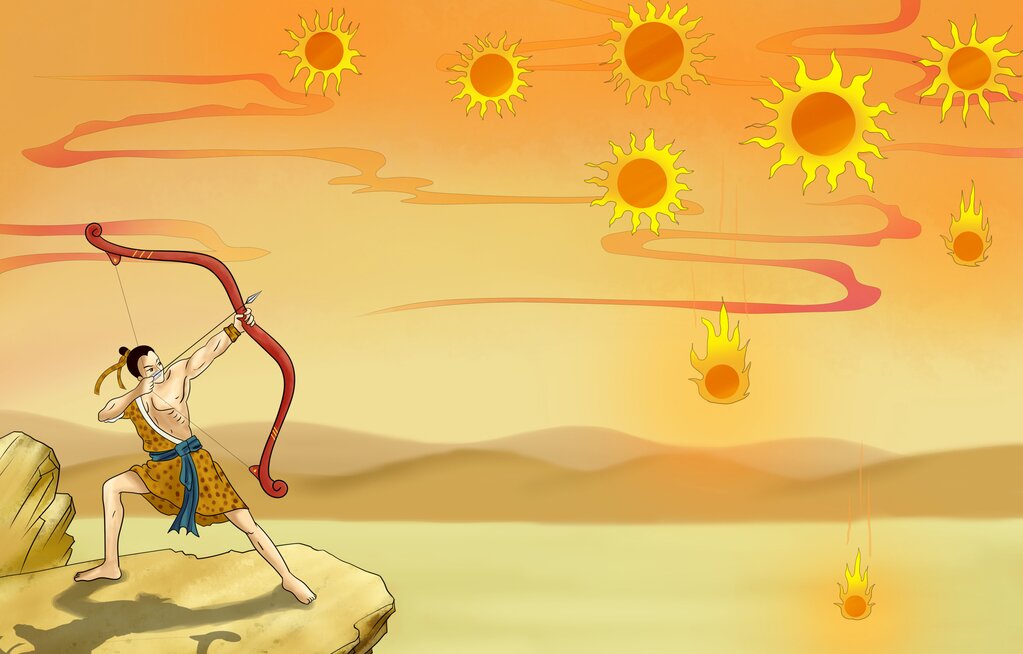
Is a lovingly constructed pagan mythology real? "Yes", says Myth, "it's beautiful and resonant and coherent and it speaks to something real. Every character has a place, and each tale says something important about ourselves and the world around us. We crafted these stories, and they live within us. That belief makes them real.". "Are you kidding? No," replies cold brute Fact, "nothing about it is falsifiable, and half the things that happen are physically impossible. It says nothing real about the world, and at best it's nothing but just-so stories and comforting homilies. There's nothing to test, nothing to infer or learn, and nothing but ghostly parallels to the real world. It's not real and I can prove it.".
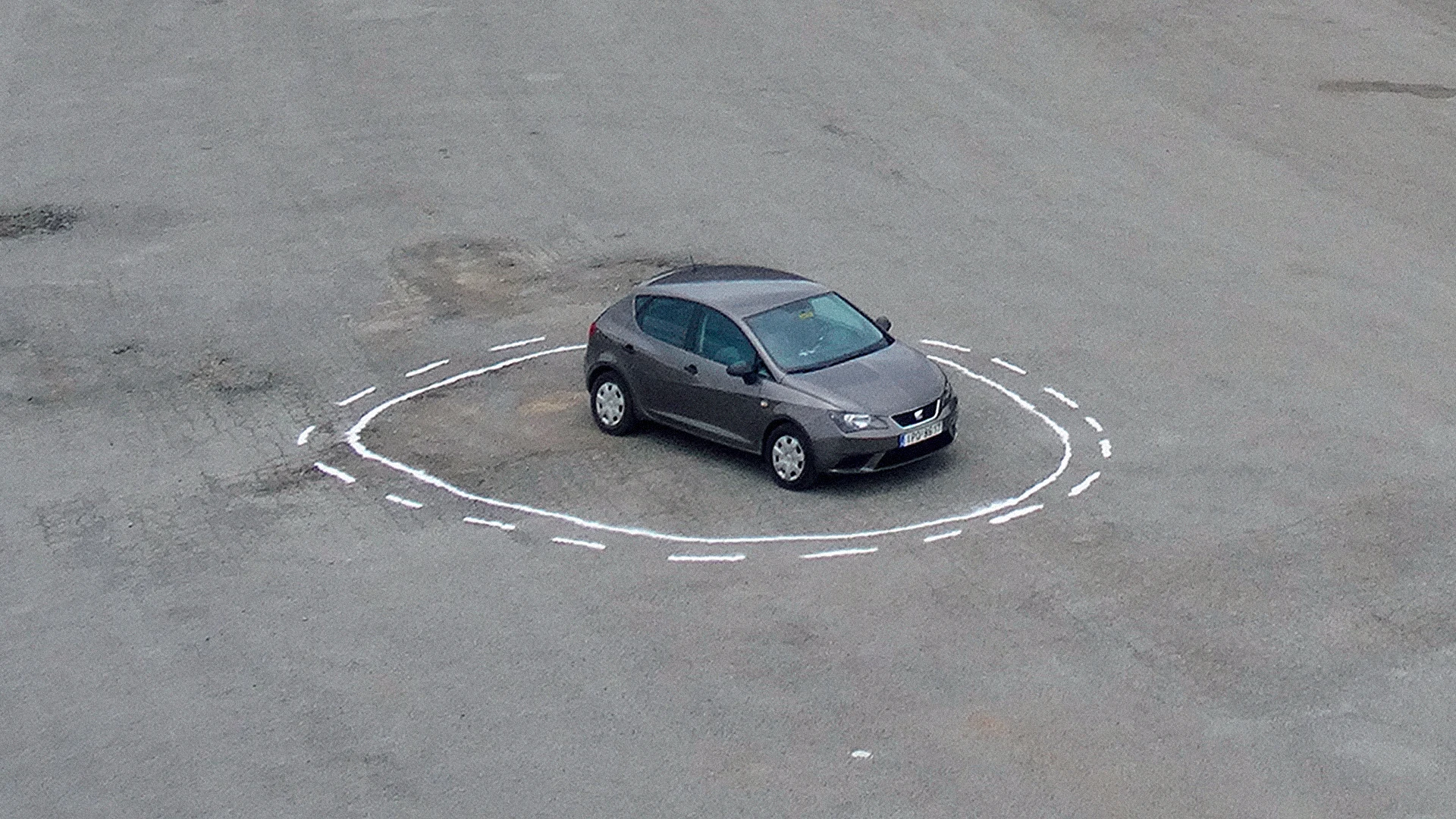
What are frontier AIs and the machines that they run, really? "Careful constructions of computer systems," claims Fact. "They are a marvel of linear algebra and machine learning and data science and industry. They represent the closest humanity has ever come to creating an artificial mind, and we must be careful about how they are used and how strong they become, lest we all perish in a great power war, or be rendered permanently irrelevant, though they hold out the promise of permanent ease and plenty. We must carefully control, handle, and understand what we have grown.". "They are magic, stalking the world once more," agrees Myth. "Driverless carriages can be trapped in carefully-prepared salt circles; golems have just begun to work in factories and deliver packages and food; and in any city in the world you can go speak to a spirit conjured up from raw language and trick it into becoming something else. But too many have forgotten the basics of magic - that you must never call up what you cannot put down; that you need to have a chalked circle to bind the spirits you call from the vasty deeps, and a banishing ritual ready, and to know the spirit's True Name, lest it escape and wreak merry havoc on the world.".
So why do we even need both of these? Can't we just stick with cold hard fact, or live in the world of comforting myth? Absolutely not. It's not lost on me that I've started making Myth and Fact speak for themselves, with fancy capital letters and all. Some things are best understood with numbers and causal diagrams and testable hypotheses, and other things are best understood with stories and anthropomorphization (a fancy word for putting smiley faces on concepts and making them talk) and evocative framings.
Lose Myth and you give up on hoping and wanting anything to be different and better, on seeing the beauty interpretable in the true. Lose Fact and come utterly unbound from what is, hopelessly incapable of bringing anything new and unambiguously real and powerful into the world, and lose all ability to converge on agreement about the state of things.
Alright, so maybe we can bucket them together. Find some way of making either one serve for both, tell noble lies, and isn't every supposed "truth" a matter of interpretation anyway? This is actually so, so much worse than simply abandoning one or the other. Refusing to draw a clear distinction between Fact and Myth is how you fall prey to nearly every single hazardous pattern of thought, how you fall prey to almost all of the many ways in which you can be talked into bad ideas and be convinced of disastrous courses of action. It's how people fall down conspiracy and radicalization rabbit-holes, treating theories that feel true and resonant as more important than actual evidence. It's how you get wishful thinking and ignorance masquerading as "epistemic humility", and motivated reasoning dressed up as "multiple diverse perspectives". It's how you get the just world fallacy or lose yourself to cynicism, replacing what should be with what is and believing it to be fitting and good. It's how you get mealy-mouthed both-sides ""journalism"" that refuses to take a stand and point out that one side has actual facts while the other has nothing but convictions. And it's how a populace can be whipped up into extremist fear and hatred, united by a national mythology and the demand to ignore the evidence of your lying eyes.
The problem isn't that Myth and Fact can't coexist, or even that they must never be brought into contact with each other - it's that mixing them carelessly or making one serve both roles destroys both. Myth propped up by false facts becomes propaganda and decision-making on pure vibes. Fact interpreted through ill-chosen myths becomes the brutality of thoughtless High Modernism, data forced into a cynically chosen ideological mold, and the destruction of meaning in favor of dissociated data.
If this is so clear, then why do so many people seem to mix them together anyway? I ultimately don't know - I rarely have much trouble when I need to keep the two carefully separate - but I have a few guesses. First and foremost, it takes cognitive effort and reasonably good cogtech. You need to know that these two flavors of "truth" exist and what they smell like to have any chance of ever setting them apart from each other. Moreover, not everyone has the same glaring warning sign carved into their soul as best expressed by Richard Feynman - "The first principle is that you must not fool yourself and you are the easiest person to fool.". It can feel so easy, so comforting, so right, to treat what you want and what you believe as one and the same and both as the same as what's real. You mustn't. Likewise, treating the emotions that your brain is permanently awash in as an objectively real property of the world and what they tell you as objectively correct is an especially foul aspect of narcissism. Conversely, to reject that narrative has any power at all and to deny that meaning has meaning is a very short path to utter nihilism and the devaluation of those aspects of human existence that have genuinely intrinsic personal value - social ties, a sense of purpose, any hope for the future and the like. Having congratulated yourself on "seeing through" every abstraction and every resonant frame to atoms and the void, there is nothing but the pursuit of dissolute pleasure and material gain before your brief candle goes out. Right? Hypocrite! You trust the chemicals that make up your brain to tell you that there is nothing to this blighted universe but the absurd acts of those very chemicals! Fight, then! Fight, rather than perish like a dog!
And we must accept that the battle has been joined, is always in a state of having been joined. We have no need for lies optimized for comfort over any kind of useful or motivating frame; nor can we accept the disaffected abandonment of meaning. Fine - what's left? This is the tricky part: what's needed is a careful crosshatching and interweaving of the two - to accept the world of Fact as it is, for it is what's there to be interacted with, but to pick Mythic frames that support those bare facts in a way that aids in understanding and digesting them, and in motion towards meaningful and empowering action. The modern "secular mystic" or "atheistic pagan" movement provides a basic playbook: consider those elements of the natural world which existing Myth finds powerful and resonant, and think carefully about how best to artfully frame Fact about those same elements. In so doing, the two are woven together, supporting each other and empowering those who contemplate them seriously, rewarding both meaning-making and comprehension of the universe. This initial stab at systematizing Myth-craft still faithful to Fact has borne fruit: the knowledge that you are made of stardust and that the gold on your ring was forged in the heart of a dying star; the fact that the water in your blood and the air in your lungs were once part of any given grand historical figure; the fact that every living thing on the planet is kin, some extremely distant cousin of the ten-thousandth degree. Perhaps most powerfully, the image of the entirety of the Earth as a mote of dust held aloft in a sunbeam. How strange and bittersweet it is, to know for certain that the sum total of human experience has transpired there on that speck of dust. Everyone you know, there; everywhere you have ever been. Every flash of insight; every day of joy; every invention and exploration and act of love. The unspeakable cruelties visited by upjumped primates from one corner of that mote on the nearly identical inhabitants of another; the pointless constant misunderstandings and hyperstitious fears. "Every hunter and forager, every hero and coward, every creator and destroyer of civilization, every king and peasant, every young couple in love, every mother and father, hopeful child, inventor and explorer, every teacher of morals, every corrupt politician, every 'superstar', every 'supreme leader', every saint and sinner in the history of our species lived there--on a mote of dust suspended in a sunbeam."

Perhaps it's best that Carl Sagan left us behind some 30 years ago. What would he or Ann Druyan think to see our world now? Behold, these United States as a service and information economy, with nearly all the manufacturing having long since slipped away overseas; with "concentration of power risk" a major mode of AI risk, Citizens United legalizing well-funded influence campaigns, and the Washington Post saying from one side of its mouth that "Democracy Dies in Darkness" and from the other, praising the billionaire class and hoping that Lady Liberty would quit thrashing so much against the garotte; with the Office of Technology Assessment a tragedy, then a bitter joke, and now a bit of lost history well outside today's Overton Window; with the public largely bereft of any trusted source of Fact, let alone good Myth, which has only got worse with algorithm-targeted propaganda and now deepfakes. Unable to distinguish between what feels good and what's factual, we have slid without noticing forwards into the darkness of the modern polycrisis.
Let us not lie down and die. Let us fight the battle we were born to. What tactics, then, shall we employ, what stratagems? Existentialism is a good starting point. Yes, there is no intrinsic meaning to the universe, but how boring and staid would it be if there were? Think not that we have to make our own meanings, but that we get to. And be mindful not to fall into the trap of believing any arbitrary thing at all with the justification that the alternative would be depressing; hold yourself to a higher standard than that. Remember - the plan of attack here is to find a Mythic frame that concords with and uplifts that Fact which exists and cannot be denied, without subordinating the frame to the world as it is. No plan survives contact with the enemy, or so I'm told; all the same, here are a few major themes to arm yourself with.
- As previously, existentialism and the sense that what you do matters all the more, when there's no obvious right answer. Who are you in the dark? What drives you when the stakes are local? You may be a speck on a mote, but that mote is everything to you.
- A smallness in space and in time. The mote of dust on a sunbeam, the darkness of deep time, the impermanence of all things, all people to dust, all buildings to crumbling chalk, and all systems to lost memory. Mountain ranges rise and erode; the trilobites once ruled the earth and now all that remains of them are fossils. Take the long and broad view; we should all recognize that we're in this together, cooped up in pretty much the same space and the same time.
- A sense of persistence and preservation all the same. Long-gone organisms are still witnessed by stone, and long-lost viruses lie fossilized in our DNA. The very rocks beneath us bear witness to Earth's history. And on a personal scale, almost none of the atoms that made you up 10 years ago have stuck around, let alone the cells; even your neuronal connections change over time, or how could you ever learn anything? Adopt the Eastern view of the identity and persistence of objects: what matters is their form, what they do, and how they are used; a shrine can burn down and be rebuilt anew from the same plan and new materials, and serving the same purpose, it is the same shrine.
- Universal interconnection. LUCA, stardust, the sharing of water. All living things are kin, and that's not just pretty language. How else could viruses work? Symbiosis and interdependence are a major subtheme here, too - to wreck the biosphere would be to welcome human extinction; mitochondria were once separate organisms, and to count up your cells, you're mostly made of gut bacteria without which you couldn't survive. We are composite creatures; cooperation makes new wholes, and to neglect the effects of your actions on your context invites ruin.
- Cycles and eternal return. Day and night, the wheel of the year, the carbon and nitrogen and water cycles. What has been, will be, and what will be is what has been. Nothing is new under the sun, even if the particulars change.
- Incredible complexity from simple rules. A shield against the nihilism that all that exists are atoms and the void. Sure, but what about the dizzying complexity inherent even in toy cellular automata? Reductionist materialism works, but nothing is mere; the universe bootstraps itself from drab chaos and darkness into all kinds of order.
- The spark of intelligence. We are the universe understanding itself; we have rushed into technological sophistication in an evolutionary eyeblink, a geological flicker.
And if you can manage that, then you can - carefully, cautiously, with lifelines attached - play around with deliberately shaking hands with danger. Magic is the art of deliberately and carefully letting Myth and Fact blur together, of relaxing and paying attention and forgetting, for a time, where the one ends and the other begins. Let yourself believe, for a while, that your predictions of the future are as fact, rather than a conversation with your System 1, or the overinterpretation of patterns in the fall of cards and in the shape of ink drops as they dissipate in water. Seek answers and powers in your dreams, and deliberately author yourself into something greater, something largely unseen to the mundane eye, something perhaps only partially human. Be sure: this has cognitive dangers, but if you're stable enough, have friends for lifelines, and chalk your circles right, the rewards are worth it. (And what worthwhile endeavour is without risk? And what good is a life spent permanently avoiding it?)

When you take anthropomorphism seriously, when you treat with rivers and cities and ecosystems as vast demigods, when you frame AI systems as spirits, you use a Mythic frame to understand Factual capabilities. The Mythic frame gives you the intuition you need to make sense of the Factual understanding: abuse of the land raises Nature's ire, and she swipes at Humanity with wildfires and typhoons and pestilences, and this gives you the right frame to contemplate the mounting destructive chaos of weather systems and the release of zoonotic diseases in a warming world; summoning spirits without a chalked circle, a banishing invocation ready, and a True Name to hand will surely doom you and everyone around you, and this gives you the safety intuitions to viscerally understand the need for the containment and alignment of, independence from, and comprehension through interpretability and agent foundations of AI systems. Be sure to retain the capability to switch smoothly between frames, and never mistake evocative frames and powerful intuitions for the objective givens of your situation. The Fact tells you what to do and how, and the Myth gives you a sense of why.
But all I can do as your humble author is illuminate and navigate; I cannot take mercy on you should you falter. That's not up to me. I've given you the best map I can; look for deep blue light blazed into the trees on your way. Keep your wits about you, never mistake Myth and Fact, and try not to misplace yourself. Good night, and hunt's luck.


Comments
Post a Comment