80. And All This Concrete Will Someday Be Chalk
(This one's just plain weird; a stream-of-consciousness meditation in deep time. Written while riding back from a long and interesting day spent with SP full of sunshowers. Thanks, SP.)
But hillsides aren't permanent, nor even mountains, it occurred to me - "until Mount Baektu wears away" and whatnot - landslides happen, and earthquakes, and the patient weathering of stone by water and wind. And concrete is no different - wet calcium silicate becoming calcium hydroxide, and then patiently sipping carbon dioxide to turn that calcium hydroxide into calcium carbonate. Limestone, in other words. Sea shells. Chalk.
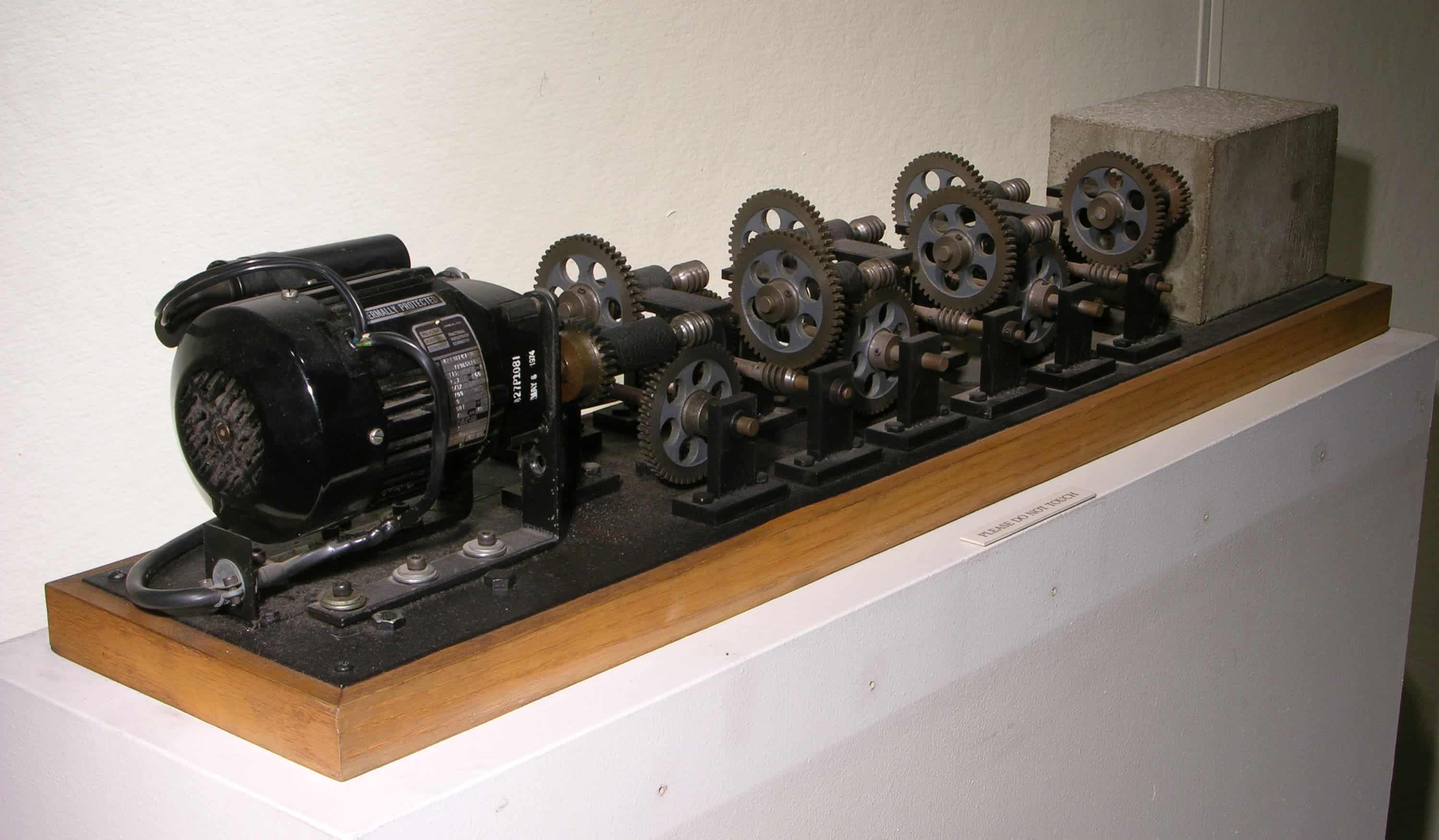
And my mind wandered to a piece of art I once saw; one of my earliest clear memories, from when I was maybe 7 or 8 years old - a simple motor, spinning on and on, with a 50:1 gear reduction (or so I recall) turning multiple revolutions per second into a revolution every few seconds, and another 50:1 reduction turning that into a revolution every few minutes, and another, and another, and so on for a total of 12 reductions, with the final gear embedded firmly in a block of concrete. And why not? It would, after all, take over 2 trillion years for it to turn once. Why not make a point by embedding it in stone? To drive the point home, to sharpen the paradox of rapid motion at one end of the gear chain and effective stillness at the other? And I remembered having seen that very same piece of art at a different museum just the previous day, an old friend following me on my way; a physical memory of the first time I ever gazed into the depth of ages and understood the abyss of deep time.
And one day, maybe thousands or millions of years from now, that block of concrete would turn to chalk, slowly, from the outside in, and cease to particularly impede the gear's motion, albeit without much point to it, for the final gear would by that point have budged perhaps a thousandth of a second of arc after a few million years as the concrete around it turned to fragile chalk and flaked away.
And the skyscrapers before me - tall and proud as some Phoenician sailor - would one day become vast pillars of limestone full of rusting rebar and shattered glass, every one of them; each of them crumbling under their own weight, if the vagaries of human affairs didn't conspire to raze then first, by careful demolition or sudden earthquake or unfeeling bombs; every one of them, monumental sticks of chalk, with no giant hand to lift them and write upon the heavens. A moment of contemplation, then, for the fancy mathematician chalk I carry always with me; how brilliant its white; how fragile its form. It wears away, in serving its purpose; the buildings before me and that block of concrete and every plaza and every brutalist Corbusian wonder and every jailhouse of sorrows and every skate park and every sculpture, all to wear away in time.
And deep time swallows us poor mortals all, no matter what we might try, no matter how long we might live, no matter how unbounded we might become. And all this concrete will someday be chalk.

Comments
Post a Comment